
2025 Year in Review
In 2025, BiblioCommons focused on a clear and increasingly urgent challenge facing public libraries: reducing friction in the online library experience. As digital services expand, patrons are often asked to navigate multiple platforms, manage separate accounts, and move between disconnected systems to complete even simple tasks. Over time, this complexity can create barriers to engagement.
Guided by close collaboration with library partners, BiblioCommons advanced a platform vision we refer to as the One-Click Experience. The goal is straightforward: make it easier for patrons to log in, explore, discover, and engage with your public library by reducing unnecessary steps and bringing more of the experience into a single, cohesive journey.
Exploring AI with Care, Transparency, and Library Values
In 2025, BiblioCommons began intentional exploration of artificial intelligence as another way to simplify the online library experience while upholding the values that make libraries trusted institutions. Rather than adopting AI for its own sake, this work focused on careful experimentation grounded in accuracy, privacy, equity, and transparency.
Working in collaboration with a small group of strategic partner libraries, BiblioCommons identified early use cases where AI could help make complex tasks easier for patrons and staff alike.
Initial areas of exploration included:
• Ask the Library - A conversational tool designed to help patrons quickly find answers to common questions
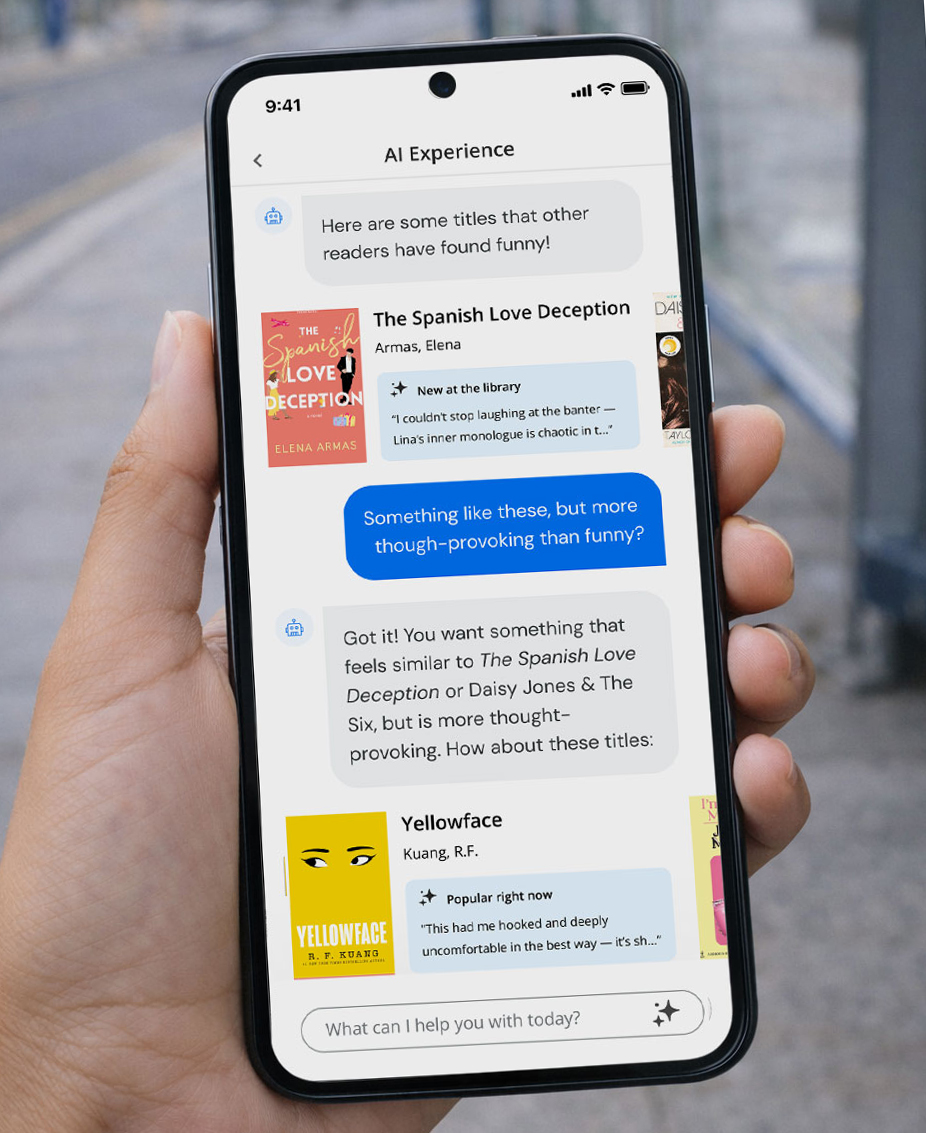
• AI-powered catalog discovery - Enabling patrons to describe interests or moods and receive curated title suggestions in a conversational format
• AI-summarized reviews - Supporting quicker, more confident decision-making during discovery
Each of these efforts shares a common objective: reduce complexity while keeping patrons within a single, cohesive experience. As this work continues, BiblioCommons remains committed to shared learning with library partners and to being transparent about how AI is used and why.
Personalization That Respects Patron Choice
Personalization remained a central pillar of the BiblioCommons platform in 2025, with a focus on clarity, patron control, and relevance. New tools were designed to make it easier for patrons to shape their own experience while giving libraries effective ways to connect people with content, programs, and resources. A centralized patron profile allows users to explicitly share preferences, such as genres or age groups, which inform recommendations across the BiblioCommons suite. These preferences can be updated or removed at any time, ensuring patrons remain in control of how personalization is applied.
Personalization was also introduced into key moments of the discovery journey. For example, when patrons encounter long wait times for popular titles, the system can offer alternative suggestions aligned with their stated interests. For libraries, these enhancements support more relevant outreach with less manual effort. For patrons, they create a clearer, more meaningful connection to the library’s collections and services.
Making Search More Relevant with Enhanced Content Promotions
As part of the broader effort to reduce friction, BiblioCommons enriched how libraries connect patrons to services, programs, and resources at the moment of discovery. Content Promotions surface relevant library content directly within search results and title pages, allowing patrons to uncover events, blogs, and online resources without leaving their search flow. By placing contextual information where patrons are already looking, libraries can create more meaningful connections with less effort and fewer clicks, turning routine searches into opportunities for deeper engagement.
Expanding Discovery Through Browse & Discover
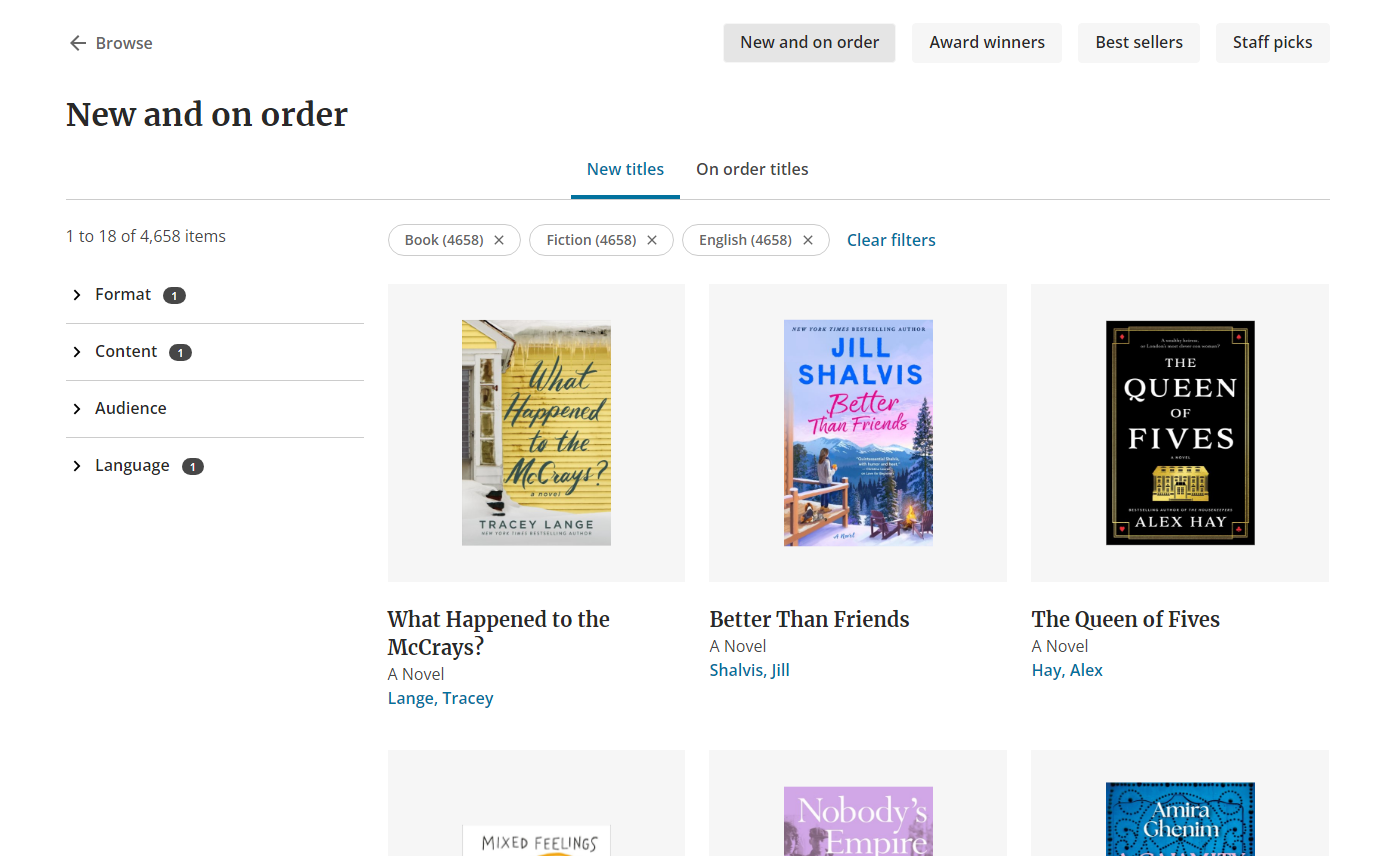
Building on early work introduced in 2024, the Browse & Discover experience continued to evolve in 2025. Initially launched in the catalog, this library-curated browsing experience expanded to the mobile app, allowing patrons to explore collections, lists, and pathways across platforms in a consistent way.
Browse & Discover was designed to support both intentional searching and open-ended exploration. With staff-curated content presented in clean, modern layouts, patrons can move easily from searching for a specific item to discovering something new. This approach supports deeper engagement with collections and helps libraries surface the full breadth of their offerings. Ongoing testing and measurement using the BiblioCommons Analytics Platform ensures that these discovery experiences continue to improve based on real patron behavior and outcomes.
Strengthening Patron Communication with Message Bee and Unique Management Services
Clear, timely communication is essential to helping patrons stay connected to their library. To support this need, BiblioCommons partnered with Unique Management Services to expand how libraries communicate with patrons across the digital experience.
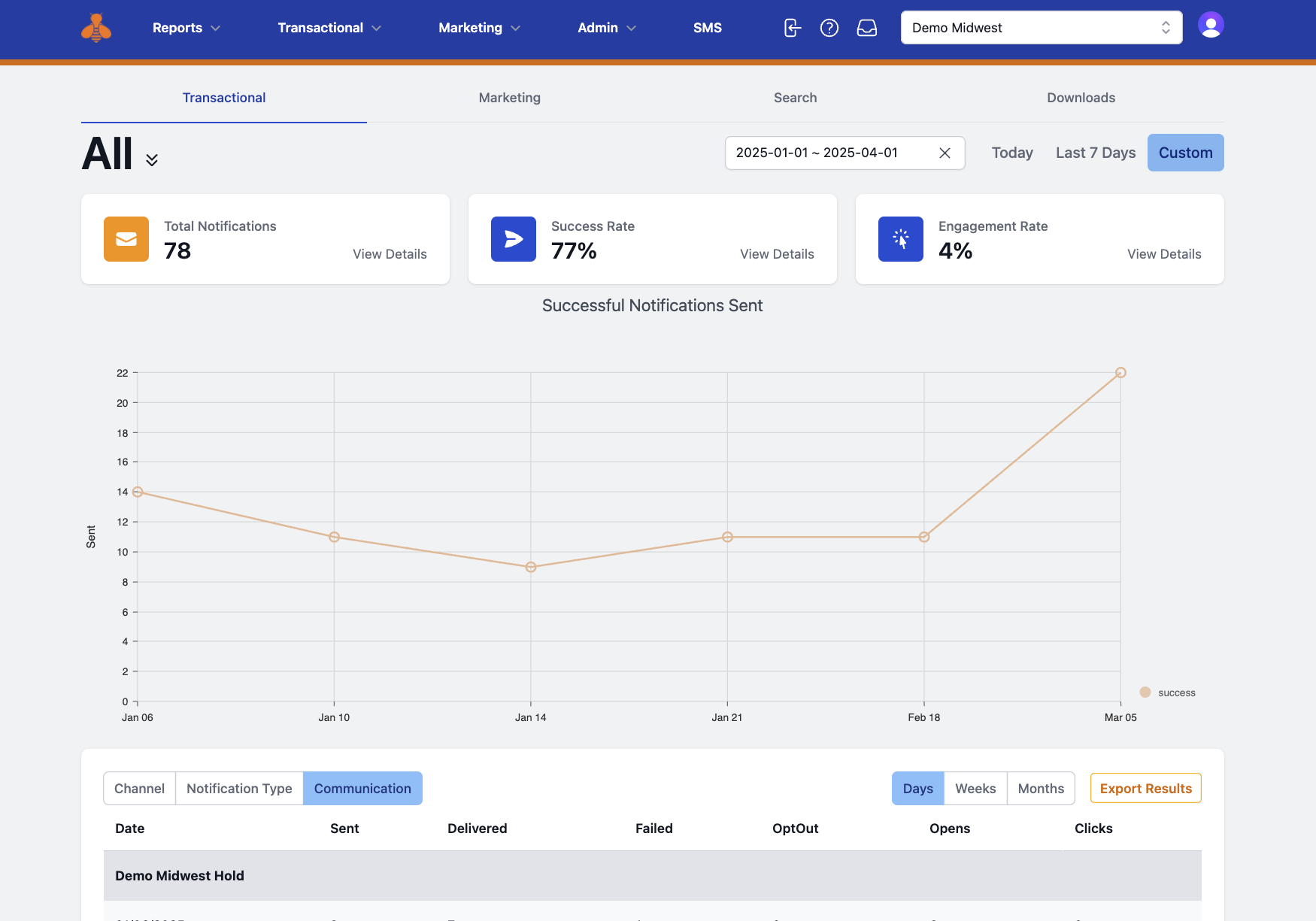
Through this partnership, libraries can offer SMS, voice, and email notifications within the BiblioCore experience using MessageBee, alongside push notifications in BiblioApps that are currently in development. These communication options allow libraries to reach patrons through the channels they already use, while giving patrons control over how and when they receive messages.
For library staff, the integration reduces complexity by centralizing notification management in a single interface. Messages can be customized, automated using ILS data, and delivered in multiple languages, helping libraries communicate more effectively with less ongoing effort. Reporting tools also provide visibility into delivery and performance, supporting continuous improvement. By integrating patron communication more closely with accounts and discovery, libraries can create a more cohesive, responsive online library experience that benefits both patrons and staff.
Reducing Friction from Login to Discovery to Checkout
One area of focus in 2025 was improving how patrons enter, move through, and complete tasks within the online library experience. Enhancements to onboarding and account access were designed to provide faster, clearer entry points and a more intuitive way to navigate library services once signed in. A personalized dashboard brings key account activity together in one place, helping patrons better understand and manage their relationship with the library.
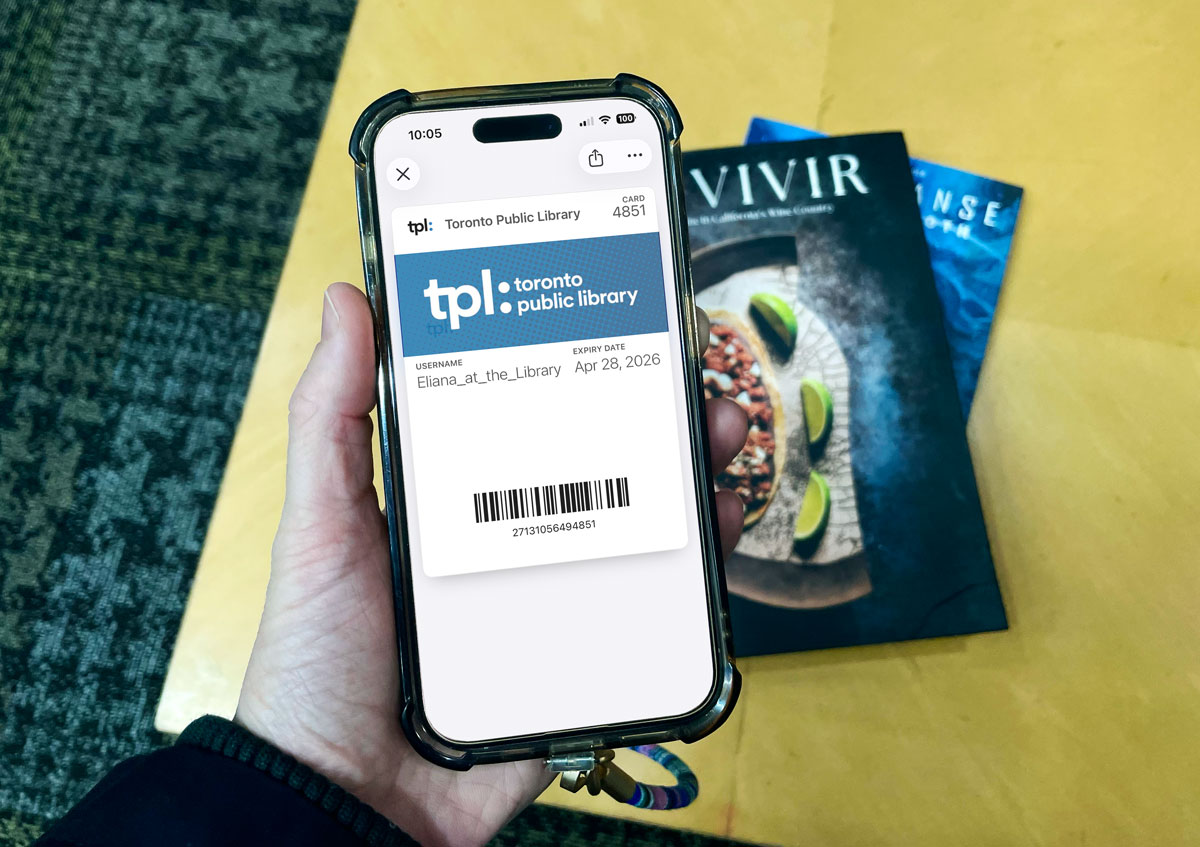
These improvements extend through the checkout process as well. With the introduction of library cards in Apple Wallet for BiblioApps, patrons can access their digital library card just as easily as they do other passes and credit cards. Library cards for the whole family can be stored in one place and are available even when offline, making in-branch visits and self-service interactions easier and more reliable.
Together, these updates are especially meaningful for patrons who use more than one library system or manage accounts for family members. By simplifying how users sign in, switch between accounts, and access their library card when needed, libraries can reduce friction throughout the entire journey and help patrons stay connected across service areas.
Making Library Events Easier to Find, Plan, and Attend
From discovering an event to showing upon the day, small moments of friction can make the difference between interest and participation. Updates to BiblioEvents focused on smoothing that path, helping patrons stay oriented, informed, and engaged throughout the event journey.
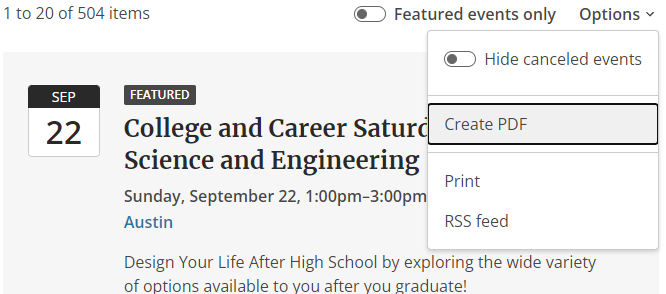
Patrons can now save events they are interested in and see everything they have registered for or are waitlisted for in one place. Having a single view of upcoming plans makes it easier to manage schedules and return to events without starting over. Planning for events also became more flexible this year. Patrons can create printable PDFs of upcoming events tailored to their interests, making it easy to share plans, bring a schedule along, or move between digital and print. Staff can also generate these printouts on behalf of patrons, supporting different planning needs and preferences.
Clear, consistent information helps patrons feel prepared. Libraries can now display accessibility and language accommodations directly on event detail pages, so patrons know what support is available before they attend. Making this information visible reduces uncertainty and helps more people feel welcome. Together, these updates help library events feel easier to discover, simpler to plan for, and more approachable to attend, strengthening the connection between programs and the communities they serve.
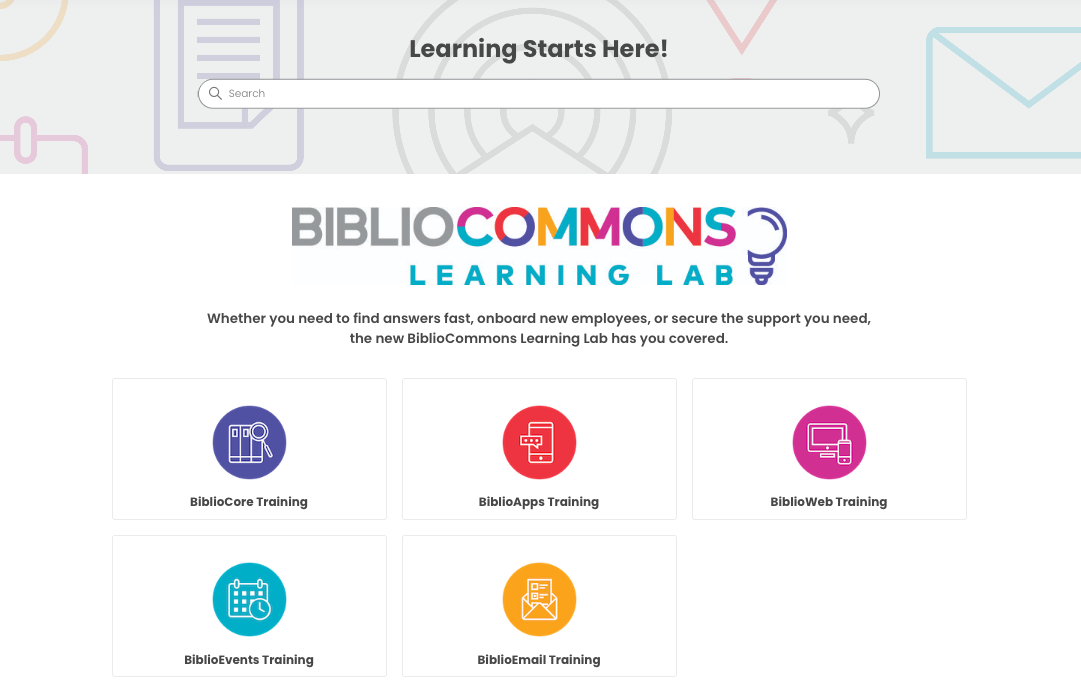
Supporting Library Staff with the New Learning Lab
In 2025, BiblioCommons introduced the new Learning Lab as a central place for library staff to build skills, revisit key concepts, and get oriented to the platform. As digital services grow and expectations change, libraries are balancing day-to-day work with the need to stay confident using tools that continue to evolve. The redesigned Learning Lab was created to support that reality, offering guidance that is easy to access and simple to fit into existing workflows.
The Learning Lab brings together training for BiblioCore, BiblioApps,BiblioWeb, BiblioEmail, and BiblioEvents in a single, easy-to-navigate space within the Partner Portal. Whether staff are brushing up on a specific task or getting up to speed in a new role, the Learning Lab is designed to meet them where they are and support learning without adding unnecessary complexity.
Bringing the Library Community Together at BiblioCon ’25
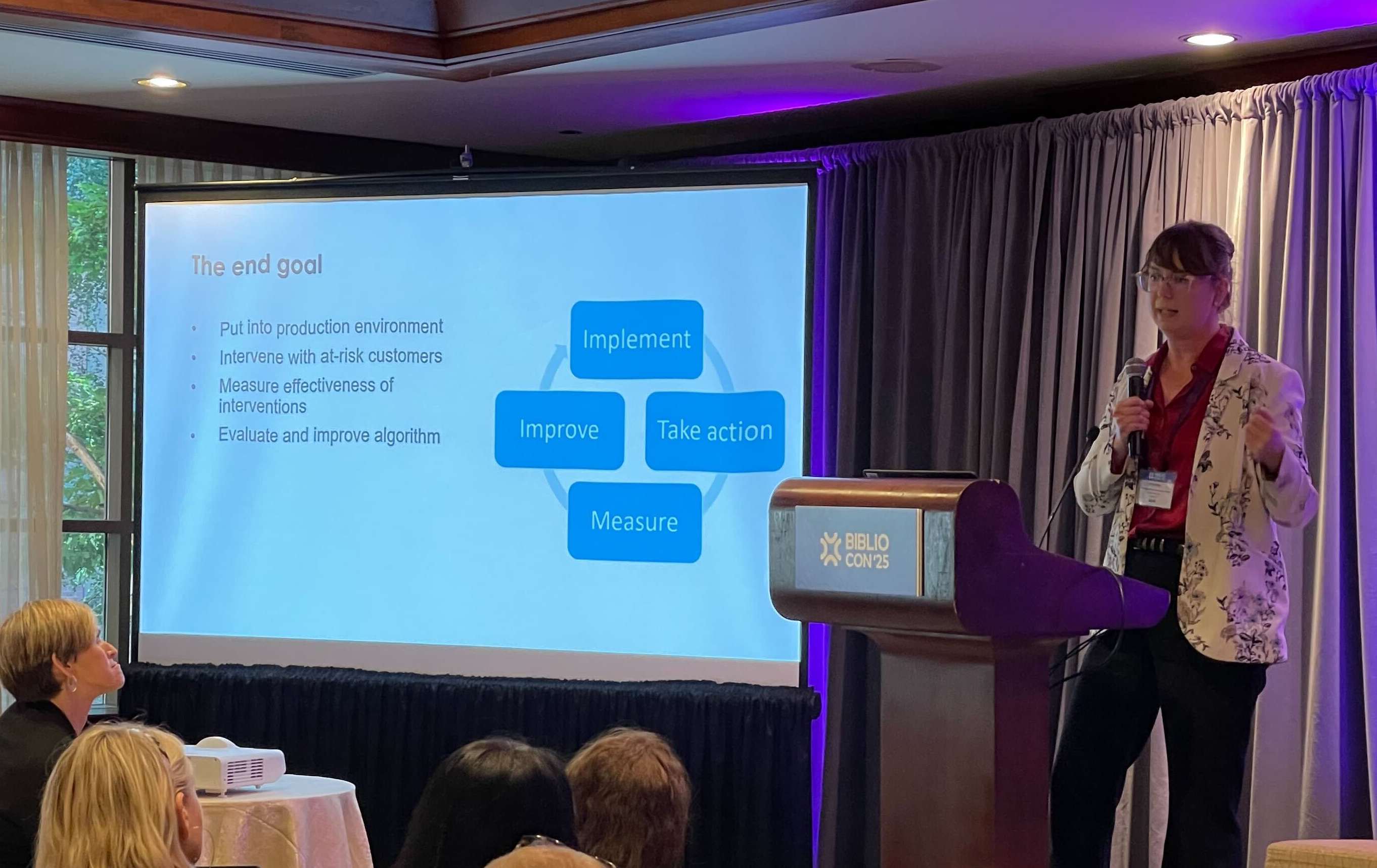
Three days, participation from 131 public libraries, dozens of sessions exploring how the online public library experience is evolving. BiblioCon ’25 marked an important milestone for the BiblioCommons community as we hosted it in a hybrid format for the first time, bringing library staff together both in person in Toronto and virtually from across North America. This expanded approach allowed more voices to take part while preserving the collaborative, peer-driven spirit that has long defined BiblioCon.
Across sessions and discussions, library professionals explored how emerging technologies, including AI, personalization, and eReading, can be applied in ways that reinforce public library values such as privacy, accessibility, and trust. Conversations balanced strategic thinking with practical examples from libraries of all sizes, offering ideas participants could adapt within their own organizations. For library leaders attending in person, BiblioCon ’25 also introduced an Executive Strategy Track, creating space for CEOs, CIOs, and senior leaders to engage directly with one another and with the BiblioCommons team. These facilitated discussions focused on prioritizing strategic work related to AI, personalization, and the future of eReading, and reflected a shared interest in shaping long-term digital direction with intention and care.
The hybrid format broadened opportunities for connection overall. In-person conversations and informal gatherings complemented live virtual sessions, office hours, and Q&As, reinforcing a shared learning environment that extended beyond physical walls. Whether attending on-site or online, participants contributed to a forward-looking community focused on the future of the online library experience. For a deeper look at the sessions, themes, and community moments that defined BiblioCon ’25, read the full recap on the BiblioCommons blog.
Learning Together Through Virtual Meetups and Webinars
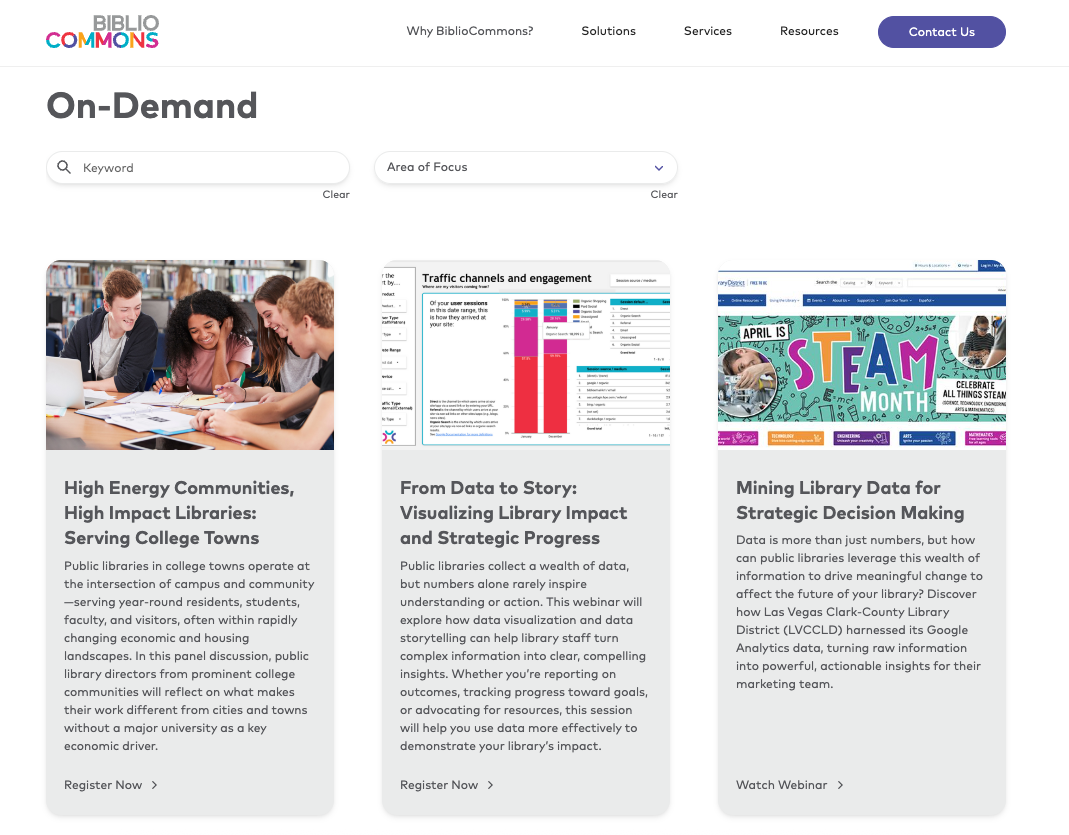
Shared learning helps libraries respond to evolving patron needs. Throughout the year, BiblioCommons hosted virtual meetups and webinars that brought library staff together to exchange ideas, explore emerging topics, and share practical approaches that strengthen the patron experience.
Virtual meetups offered an open forum for public library staff to learn directly from product managers and subject-matter experts. Sessions covered topics such as readers’ advisory, website management, email marketing, catalog discovery, events management, and analytics, with a focus on strategies libraries can adapt to their own communities. Webinars complemented this work by providing on-demand learning for library staff at all levels. Featuring both BiblioCommons team members and public library staff, these sessions shared real-world examples and actionable insights, helping libraries apply what they learn in meaningful ways. Together, these learning opportunities support more informed decision-making and help libraries continue to evolve their services to serve their communities better.
Welcoming New Libraries to the BiblioCommons Community
Throughout 2025, public libraries across North America joined the BiblioCommons community, reflecting continued interest in building cohesive, patron-centered online library experiences. A big welcome to: Lake County Public Library (CA), Poudre River Public Library District (CO), Jersey City Free Public Library (NJ), and Cooperative Computer Services (IL) for subscribing to the BiblioCore Discovery layer, and to Fort Vancouver Regional Library District (WA), Napa County Library (CA), and Guelph PublicLibrary (ON) for subscribing to the complete BiblioCommons Digital Experience Platform. These new partnerships represent a wide range of library sizes, service models, and community contexts, each bringing unique perspectives that strengthen the broader BiblioCommons network.
In addition to welcoming new library partners, many existing libraries expanded their use of the platform to support deeper integration across their digital services. Libraries with new subscriptions to BiblioWeb included Hamilton Public Library (ON), Coquitlam Public Library (BC), and Northbrook PublicLibrary (IL). Libraries adding BiblioApps to their subscriptions included Lawrence Public Library (KS) and Oshawa Public Libraries (ON). Whether adopting additional products or extending their implementation, these libraries continue to shape the platform through collaboration, feedback, and shared learning.
Looking Ahead
Across onboarding, discovery, personalization, improved staff workflows, and early AI exploration, the work of 2025 reflects a consistent theme: bringing patrons closer to the library by making the digital experience simpler, more connected, and easier to navigate. By reducing friction and designing with intention, BiblioCommons continues to support libraries in meeting modern expectations while staying true to public library values.